
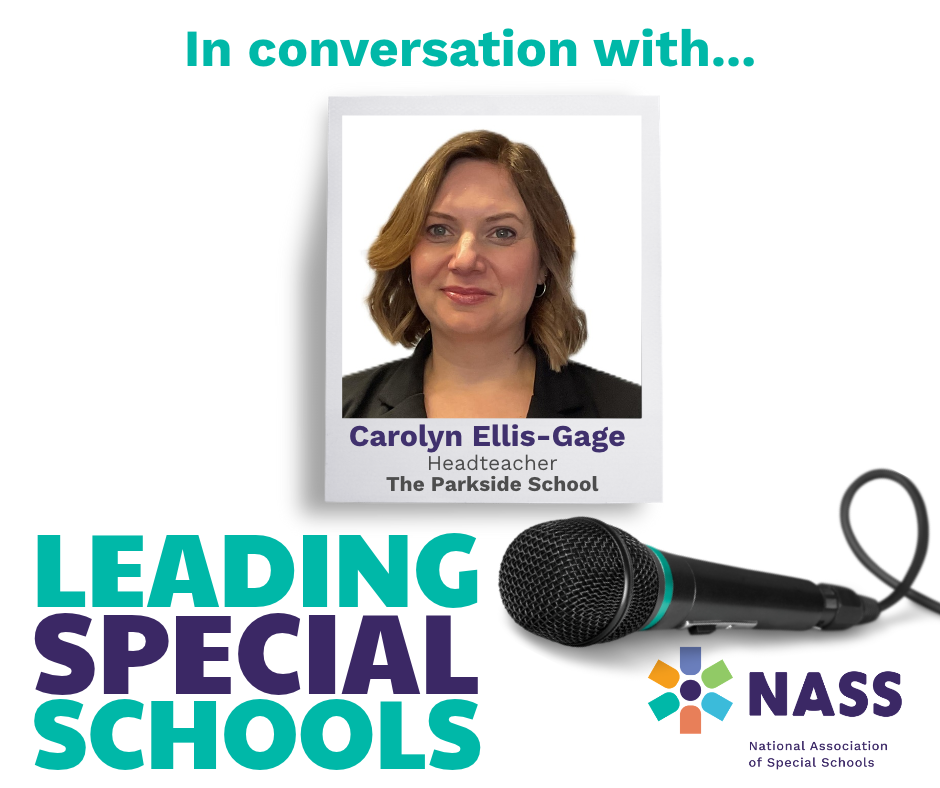
Welcome to Leading Special Schools, our new series spotlighting the people leading special schools across our community and sharing their insights, experiences and reflections.
In our first interview, we hear from Carolyn Ellis-Gage, Headteacher of The Parkside School, a maintained special school in Norwich, Norfolk. Carolyn reflects on her unexpected route into special education, her pride in pupils’ progress through sustained, consistent support, and her approach to leadership, rooted in ethics and care.
-----------------------------------
Tell us about your school and your role
I am Carolyn Ellis-Gage, Headteacher at The Parkside School—a specialist provision in Norwich, Norfolk, for children aged 7–18 with complex learning and cognition needs. All 200 of our students have Education, Health and Care Plans (EHCPs). Alongside our on-site provision, we deliver specialist outreach support to mainstream schools and inclusion bases across Norfolk.
What's something about your role that people might be surprised to learn?
Before joining Parkside, I had never set foot inside a specialist school!
While working as a mainstream teacher and school leader, I remembered how much I enjoyed supporting pupils with complex needs when I was a student. The very first time I visited a special school was when applying for the Assistant Head role at Parkside. I immediately fell in love with the learning environment and its holistic approach to education. However, the learning curve was steep—for a long time, I felt like a brand-new teacher all over again.
I progressed from Assistant Head to Deputy Head, stepping into the Headship in 2020. Today, I relish visiting other special schools to learn from their excellent practice. I am constantly struck by how distinct each provision is, yet how unified they all are in placing the child at the very centre of everything they do.
Beyond our school, I serve as Chair of the Norfolk Special School Heads Association. I enjoy advocating for our provisions within the Local Authority, drawing on my understanding of how little is often understood about special schools within the mainstream sector.
I am also an Ofsted Team Inspector; I strongly believe inspectors must have an authentic, grounded understanding of the settings they visit. I hope that knowing that I live, breathe, and navigate the exact same daily realities will help bring empathy and relief to school leaders facing an inspection.
What are you most proud of that visitors to your school might not immediately see?
The kindness, patience, and passion of our staff are immediately apparent to anyone visiting Parkside. However, visitors often remark: “Your new cohorts must be so much more complex, because the older students are so calm and independent.”
While incoming cohorts certainly have their challenges, the reality is that our older pupils are calm and independent precisely because of the sustained, consistent approaches and high expectations our teams have maintained since day one. I am immensely proud of the journey our pupils take with us, and how closely we collaborate with families to ensure they are fully prepared and confident as they embark on their next adventure.
What are your key priorities this academic year?
We have three core priorities this year:
1. Addressing multi-layered barriers: Looking beyond our pupils' primary SEND diagnoses to identify intersecting needs—such as those who are EAL, from refugee backgrounds, or young carers—and establishing how we can offer tailored support beyond statutory SEND provision.
2. Upskilling staff through educational research: Partnering with educational psychologists to deliver targeted CPD on current educational theory, working memory, and everyday oracy, ensuring our classroom practice remains cutting-edge and evidence-informed.
3. Providing holistic family support: Deepening wrap-around support for families by connecting them with essential services beyond education—including respite care, benefits advice, and community support networks—so that every family feels a genuine sense of belonging.
What do you think is the biggest challenge facing special school leaders currently, and your type of school in particular?
The current SEND tribunal system makes effective place planning exceptionally difficult. The process is broken for pupils, families, and schools alike. The relentless cycle of drafting witness statements and preparing for tribunal hearings places immense administrative and emotional strain on school leaders and parents.
Who or what inspires your leadership approach?
My leadership approach is rooted in ethics and care; our goal is to empower staff to thrive both at work and at home. I draw inspiration from thinkers like Brené Brown and Sir Ken Robinson, and I thoroughly enjoyed reading Gareth Southgate’s work and watching the play Dear England.
To bring out the best in people, you must start with unconditional positive regard. That means equipping staff with the training, skillset, and resources to excel, while maintaining absolute clarity of message and accountability to our children. Celebrating a job well done is equally vital.
Has special school leadership changed you as a person? If so, how?
Yes. It has taught me that nothing is ever as simple as it first appears. It has deepened my patience and given me the confidence to stand up and speak out when something isn't right—it is a privilege and a duty to advocate for those who cannot easily advocate for themselves. Above all, it reminds me daily of how much I still have to learn.
What gives you hope for the future of SEND education?
The unwavering passion and dedication of the SEND workforce. Regardless of policy shifts, funding pressures, or legislative changes, staff consistently go above and beyond to do what is right for young people.
What advice would you give to aspiring special school leaders?
Visit as many different schools as you can to broaden your perspective—and once you have your own, make sure you are actively present across every corner of it.
What is the most important message you would want the Schools Minister, Georgia Gould, to hear from special school leaders right now?
The special and mainstream sectors must work together as one coherent, properly funded education system that equips us to do our jobs effectively. Above all: come and visit us to see the reality on the ground!
---------------------------------------------------------------------------------------------------
NASS is proud to champion and support the incredible work of over 500 special schools in our community like The Parkside School, which educate and care for tens of thousands of children and young people with SEND.
Every day, these schools make an extraordinary impact, driven by the passion, creativity and commitment of their staff.
Find out more about NASS: Who We Are | NASS